

In the realm of industrial cutting, wire saw machines have emerged as a revolutionary tool, offering unparalleled precision and efficiency. As a leading supplier of wire saw machines, I've witnessed firsthand the transformative impact these machines have on various industries, from stone processing to semiconductor manufacturing. One of the key factors that determine the quality of the cutting process is the cutting surface roughness. In this blog post, I'll delve into the concept of cutting surface roughness in wire saw machines, exploring its significance, influencing factors, and measurement methods.
Understanding Cutting Surface Roughness
Cutting surface roughness refers to the irregularities on the surface of a workpiece after it has been cut by a wire saw machine. These irregularities can be microscopic, but they can have a significant impact on the functionality, aesthetics, and performance of the finished product. Surface roughness is typically characterized by parameters such as Ra (arithmetical mean deviation of the profile), Rz (average maximum height of the profile), and Rq (root mean square deviation of the profile). These parameters provide a quantitative measure of the surface irregularities, allowing manufacturers to assess the quality of the cutting process and make necessary adjustments.
Significance of Cutting Surface Roughness
The cutting surface roughness of a wire saw machine is of utmost importance for several reasons. Firstly, it affects the functionality of the finished product. In applications where the surface of the workpiece needs to be smooth, such as in the manufacturing of optical lenses or semiconductor wafers, a high surface roughness can lead to poor performance and reduced accuracy. Secondly, surface roughness can impact the aesthetics of the product. In industries such as architecture and interior design, where the appearance of the finished product is crucial, a smooth and uniform surface is often desired. Finally, cutting surface roughness can also affect the durability and longevity of the workpiece. A rough surface can increase the risk of corrosion, wear, and fatigue, reducing the lifespan of the product.
Influencing Factors
Several factors can influence the cutting surface roughness of a wire saw machine. Understanding these factors is essential for optimizing the cutting process and achieving the desired surface quality.
Wire Characteristics
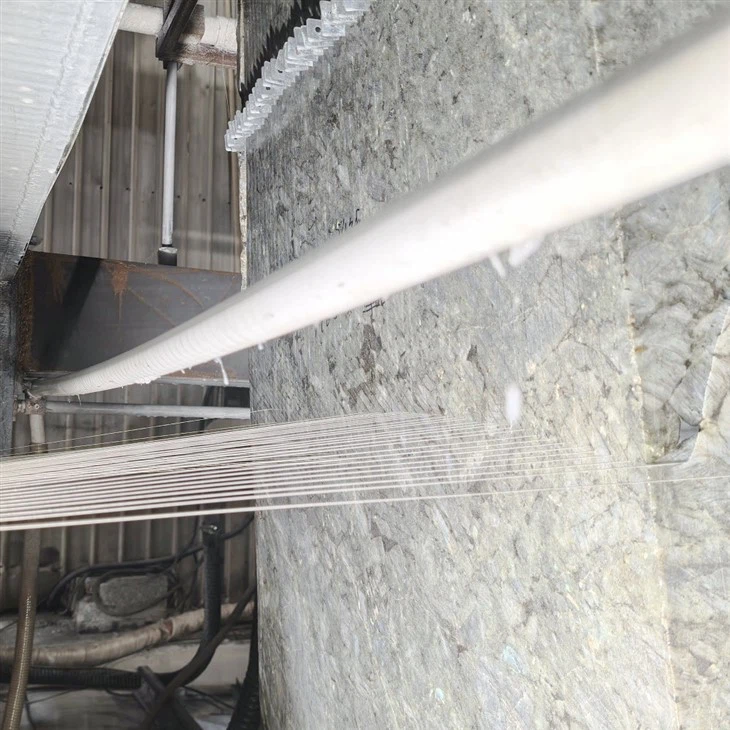
The characteristics of the wire used in the saw machine play a crucial role in determining the cutting surface roughness. The diameter, material, and tension of the wire can all affect the cutting performance and surface quality. A thinner wire generally produces a smoother surface, as it has a smaller contact area with the workpiece. However, thinner wires may also be more prone to breakage, so a balance needs to be struck between surface quality and wire durability. The material of the wire can also impact the cutting surface roughness. For example, diamond-coated wires are commonly used in wire saw machines due to their high hardness and wear resistance, which can result in a smoother surface finish.
Cutting Parameters
The cutting parameters, such as cutting speed, feed rate, and cutting force, also have a significant influence on the cutting surface roughness. A higher cutting speed can increase the productivity of the cutting process, but it may also lead to a rougher surface finish. This is because a higher cutting speed can cause the wire to vibrate more, resulting in irregularities on the surface of the workpiece. On the other hand, a lower feed rate can generally produce a smoother surface, as it allows the wire to cut more precisely. However, a very low feed rate can also reduce the productivity of the cutting process. Therefore, it is important to optimize the cutting parameters to achieve the desired balance between surface quality and productivity.
Workpiece Material
The material of the workpiece being cut is another important factor that affects the cutting surface roughness. Different materials have different hardness, toughness, and brittleness, which can influence the cutting performance and surface quality. For example, cutting a hard and brittle material such as granite may require a different set of cutting parameters compared to cutting a soft and ductile material such as aluminum. Additionally, the presence of impurities or inhomogeneities in the workpiece material can also affect the cutting surface roughness.
Machine Condition
The condition of the wire saw machine itself can also impact the cutting surface roughness. A well-maintained machine with proper alignment and calibration is more likely to produce a smoother surface finish. Regular maintenance, such as cleaning, lubrication, and replacement of worn parts, is essential for ensuring the optimal performance of the machine and achieving consistent surface quality.
Measurement Methods
To assess the cutting surface roughness of a wire saw machine, several measurement methods can be used. These methods can be broadly classified into contact and non-contact methods.
Contact Methods
Contact methods involve physically touching the surface of the workpiece with a measuring instrument. One of the most commonly used contact methods is the stylus profilometer. This instrument uses a fine stylus to trace the surface of the workpiece, and the vertical displacement of the stylus is recorded to generate a profile of the surface. The profile data can then be analyzed to calculate the surface roughness parameters such as Ra, Rz, and Rq.
Non-Contact Methods
Non-contact methods, on the other hand, do not require physical contact with the surface of the workpiece. These methods are often faster and more convenient than contact methods, and they can be used to measure the surface roughness of delicate or irregularly shaped workpieces. Some common non-contact methods include optical profilometry, laser scanning, and interferometry. These methods use light or other forms of electromagnetic radiation to measure the surface topography and calculate the surface roughness parameters.
Our Wire Saw Machines
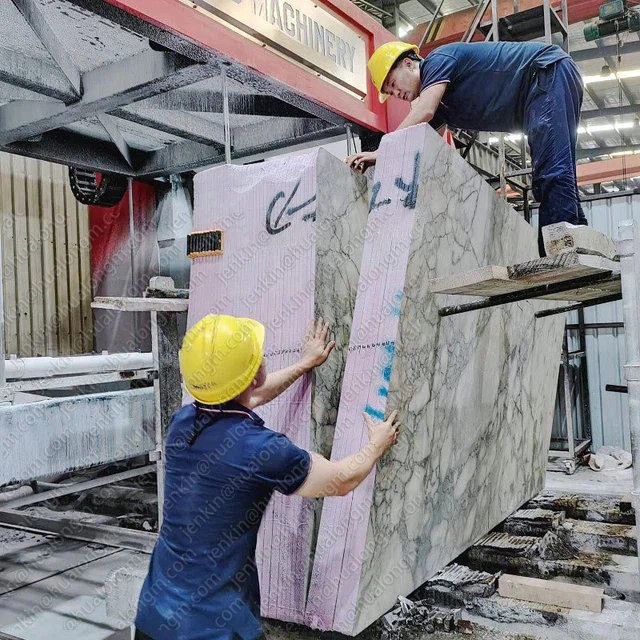
As a supplier of wire saw machines, we offer a wide range of products to meet the diverse needs of our customers. Our Fashion Multiwire Saw Machine is designed for high-precision cutting applications, offering a smooth and uniform cutting surface. With its advanced control system and innovative design, this machine can achieve excellent surface quality and productivity.
Our Multi Wire Saw Stone Cutting Machine is specifically designed for the stone processing industry. It is capable of cutting large blocks of stone with high precision and efficiency, producing a smooth and polished surface. The machine is equipped with a powerful motor and a robust wire tensioning system, ensuring stable and reliable operation.
For applications that require cutting multiple blocks simultaneously, our Multiwire Gangsaw Block Cutting Machine is the ideal choice. This machine can cut multiple blocks of stone or other materials in a single pass, significantly increasing the productivity of the cutting process. With its advanced technology and high-quality components, the Multiwire Gangsaw Block Cutting Machine can achieve a consistent and high-quality cutting surface.
Contact Us for Purchase and Negotiation
If you are interested in our wire saw machines or have any questions about cutting surface roughness, please feel free to contact us. Our team of experts is dedicated to providing you with the best solutions and support. We look forward to discussing your specific requirements and helping you find the perfect wire saw machine for your needs.
References
- Smith, J. (2018). Wire Sawing Technology: Principles and Applications. London: Elsevier.
- Jones, R. (2019). Surface Roughness Measurement and Analysis. New York: Springer.
- Brown, S. (2020). Cutting Processes and Machine Tools. Oxford: Oxford University Press.