

Hey there! As a supplier of Multi-wire Sawing Machines, I often get asked this question: Can a multi-wire sawing machine cut materials with different elastic moduli? Let's dig into this topic and find out.
First off, what exactly is an elastic modulus? In simple terms, it's a measure of a material's stiffness. A high elastic modulus means the material is stiffer and less likely to deform under stress, while a low elastic modulus indicates a more flexible material. Different materials have different elastic moduli, and this can have a big impact on how they're cut.
Now, let's talk about multi-wire sawing machines. These machines are pretty cool. They use multiple wires to cut through materials, which allows for more efficient and precise cutting. They're commonly used in industries like semiconductor, solar, and stone processing.
So, can they cut materials with different elastic moduli? The answer is yes, but it's not that straightforward.
How Multi - Wire Sawing Machines Work
Multi-wire sawing machines operate by moving a series of wires at high speeds. These wires are usually coated with abrasive particles, which help in cutting through the material. The material is fed onto the wires, and as the wires move, they gradually cut through it.
When it comes to materials with different elastic moduli, the key lies in adjusting the cutting parameters. For stiffer materials with a high elastic modulus, you might need to increase the tension on the wires and use a more aggressive cutting speed. This is because these materials are more resistant to deformation, so you need more force to cut through them.
On the other hand, for materials with a low elastic modulus, you can reduce the tension and cutting speed. These materials are more flexible, so they're easier to cut, but you still need to be careful not to cause too much deformation.
Cutting Different Materials
Let's take a look at some specific materials and how a multi - wire sawing machine can handle them.
Semiconductor Materials
Semiconductor materials like silicon have a relatively high elastic modulus. When cutting silicon wafers, a multi - wire sawing machine needs to be set up with precise tension and cutting speed. The abrasive particles on the wires play a crucial role in breaking through the hard silicon. The machine has to be calibrated to ensure a smooth and accurate cut, as even a small error can affect the performance of the semiconductor device.
Solar Panels
Solar panels are made of materials with different elastic moduli. The glass on the front has a high elastic modulus, while the underlying layers might have lower elastic moduli. A multi - wire sawing machine can cut through these layers by adjusting the cutting parameters as it moves through each layer. This allows for the production of high - quality solar panels with precise dimensions.

Stone Materials
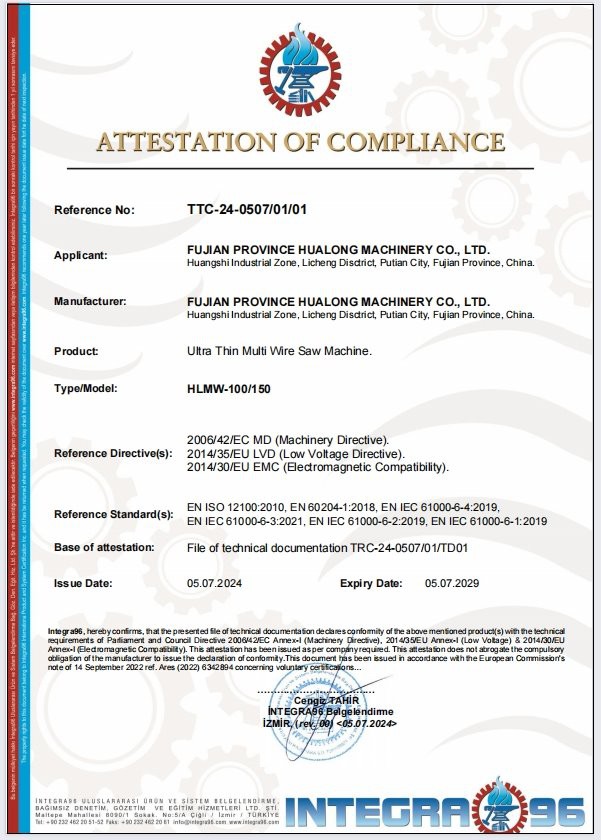
Granite is a common stone material used in construction and decoration. It has a high elastic modulus and is quite hard. A Multi Wire Machine for Granite is specifically designed to handle this type of material. These machines use strong wires and high - powered motors to cut through the granite. The cutting process requires a lot of force, but the multi - wire system allows for efficient and accurate cutting.
Challenges and Solutions
Of course, cutting materials with different elastic moduli isn't without its challenges. One of the main challenges is ensuring a consistent cut across the material. If the cutting parameters aren't adjusted correctly, you might end up with uneven cuts or damage to the material.
To overcome these challenges, modern multi - wire sawing machines are equipped with advanced control systems. These systems can automatically adjust the tension, cutting speed, and other parameters based on the properties of the material being cut. This ensures a more consistent and accurate cut, even when dealing with materials with different elastic moduli.
Another challenge is the wear and tear on the wires. Different materials can cause different levels of wear on the wires. For example, hard materials like granite can wear down the wires more quickly than softer materials. To address this, manufacturers are constantly developing new wire materials and coatings that are more resistant to wear.
The Advantages of Using a Multi - Wire Sawing Machine
There are several advantages to using a multi - wire sawing machine when cutting materials with different elastic moduli.
First, it's highly efficient. The multiple wires allow for simultaneous cutting, which means you can cut through multiple pieces of material at once. This saves time and increases productivity.
Second, it offers high precision. The advanced control systems on modern multi - wire sawing machines ensure that the cuts are accurate and consistent. This is especially important when working with materials that require precise dimensions, like semiconductor wafers.
Third, it's versatile. A Multi-wire Sawing Machine can be used to cut a wide range of materials, from hard stones to soft plastics. This makes it a valuable tool for many industries.
Conclusion
In conclusion, a multi - wire sawing machine can definitely cut materials with different elastic moduli. By adjusting the cutting parameters and using advanced control systems, these machines can handle a wide variety of materials with ease. Whether you're in the semiconductor, solar, or stone processing industry, a Multi-wire Saw Machine can be a great investment.
If you're interested in learning more about our multi - wire sawing machines or have any questions about cutting materials with different elastic moduli, don't hesitate to reach out. We're here to help you find the right solution for your cutting needs. Let's start a conversation and see how we can work together to improve your production process.
References
- Smith, J. (2020). "Advanced Cutting Technologies in Material Processing". Journal of Manufacturing Science.
- Johnson, A. (2019). "The Impact of Elastic Modulus on Cutting Processes". International Journal of Materials Engineering.
- Brown, C. (2021). "Multi - Wire Sawing Machines: A Comprehensive Guide". Industrial Machinery Magazine.