

In the realm of precision cutting, multi - wire saw machines have emerged as a cornerstone technology, finding widespread application in industries such as semiconductor manufacturing, solar panel production, and stone processing. As a trusted Multi - wire Saw Machine supplier, I have witnessed firsthand the critical role that wire speed plays in determining the cutting performance of these machines. In this blog post, I will delve into the intricate relationship between wire speed and cutting performance, shedding light on how this parameter can significantly impact the quality, efficiency, and cost - effectiveness of the cutting process.
Understanding the Basics of Multi - wire Saw Machines
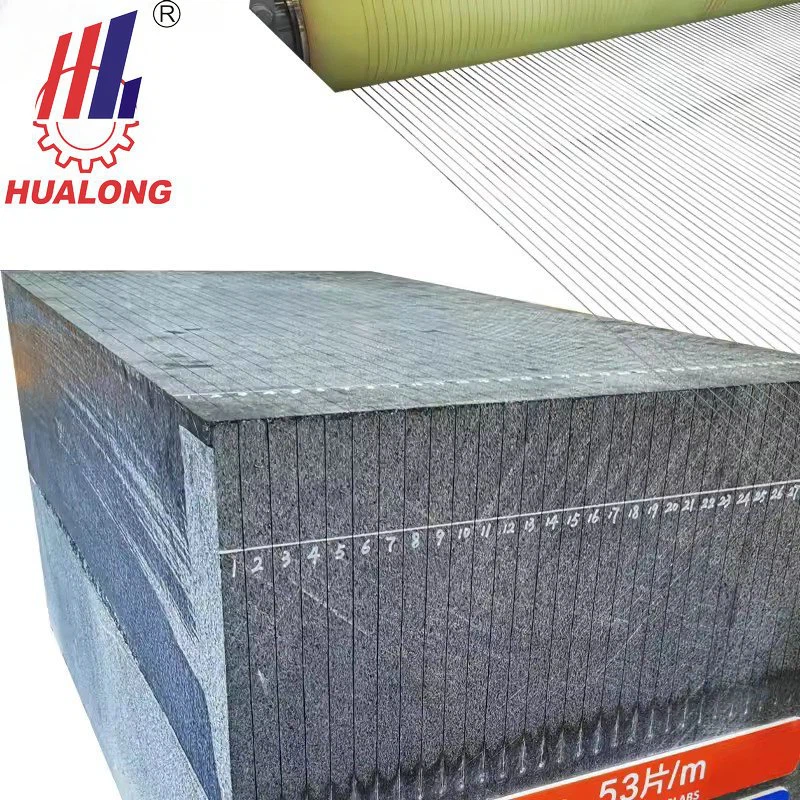
Before we explore the influence of wire speed, let's briefly review how multi - wire saw machines operate. These machines utilize a series of parallel wires that are wound around guide rollers to form a cutting zone. The workpiece is then brought into contact with the moving wires, and abrasive particles embedded in the wire or carried by a slurry are used to abrade and cut through the material. The continuous movement of the wires ensures a uniform and efficient cutting process.
Multi - wire saw machines come in different types, each designed to meet specific cutting requirements. For instance, the Multi Wire Saw is highly versatile and can be used for slicing various materials, including silicon, sapphire, and glass. The Wire Saw for Stone is specifically engineered to handle the tough and abrasive nature of stone materials, such as granite and marble. And the Diamond Wire Saw Machine uses diamond - coated wires for high - precision and high - speed cutting of hard materials.

Impact of Wire Speed on Cutting Efficiency
One of the most obvious effects of wire speed is on the cutting efficiency of the multi - wire saw machine. Generally, increasing the wire speed can lead to a higher material removal rate. As the wire moves faster, more abrasive particles come into contact with the workpiece per unit time, allowing for quicker cutting. This is particularly beneficial in large - scale production environments where time is of the essence.
However, there is a limit to how much the wire speed can be increased. If the wire speed is too high, the abrasive particles may not have enough time to effectively abrade the material, resulting in a decrease in cutting efficiency. Additionally, high wire speeds can cause excessive wear on the wires, leading to frequent wire breakage. This not only disrupts the cutting process but also increases the cost of wire replacement.
Influence on Cutting Quality
Wire speed also has a profound impact on the cutting quality. A proper wire speed is crucial for achieving a smooth and flat cutting surface. When the wire speed is too low, the cutting process may be uneven, resulting in surface roughness and waviness. On the other hand, if the wire speed is too high, it can cause chipping and cracking on the workpiece surface, especially for brittle materials.
In semiconductor manufacturing, for example, the cutting quality is of utmost importance. A rough or damaged surface can affect the electrical properties of the semiconductor wafers, leading to reduced device performance. Therefore, finding the optimal wire speed is essential to ensure high - quality cuts and minimize product defects.
Effect on Wire Wear and Lifespan
The wire speed directly affects the wear rate of the wires. Higher wire speeds generally result in more rapid wear of the wires. This is because the increased friction and impact between the wire and the workpiece at high speeds cause the abrasive particles on the wire to wear down more quickly. Moreover, high - speed movement can also lead to mechanical fatigue of the wire, reducing its lifespan.
To mitigate wire wear, it is necessary to carefully select the wire speed based on the material being cut and the type of wire used. Additionally, proper lubrication and cooling systems can help reduce friction and heat generation, thereby extending the wire lifespan.
Considerations for Different Materials
Different materials have different physical and mechanical properties, which means that the optimal wire speed for cutting them can vary significantly. For soft materials, such as plastics and some metals, a relatively high wire speed can be used to achieve a fast cutting rate without causing excessive wire wear. However, for hard and brittle materials, such as ceramics and quartz, a lower wire speed may be required to prevent cracking and chipping.
In stone processing, the hardness and abrasiveness of the stone materials need to be taken into account. For softer stones, a higher wire speed can be employed to increase the cutting efficiency. But for harder stones, a slower wire speed is often necessary to ensure a clean and precise cut.
Balancing Wire Speed with Other Parameters
Wire speed is not the only factor that affects the cutting performance of a multi - wire saw machine. Other parameters, such as wire tension, slurry flow rate, and workpiece feed rate, also interact with wire speed to determine the overall cutting results.
For example, increasing the wire tension can improve the cutting stability at high wire speeds. However, too much tension can also increase the risk of wire breakage. Similarly, the slurry flow rate needs to be adjusted according to the wire speed to ensure proper lubrication and debris removal.
Conclusion and Call to Action
In conclusion, wire speed is a critical parameter that significantly affects the cutting performance of multi - wire saw machines. By understanding the complex relationship between wire speed and cutting efficiency, quality, wire wear, and other factors, manufacturers can optimize their cutting processes to achieve the best results.
As a leading Multi - wire Saw Machine supplier, we are committed to providing our customers with high - quality machines and expert advice on optimizing cutting parameters. Whether you are in the semiconductor, solar, or stone processing industry, we have the right solution for your cutting needs.
If you are interested in learning more about our multi - wire saw machines or discussing your specific cutting requirements, please feel free to reach out to us. We look forward to collaborating with you to enhance your cutting operations and drive your business forward.
References
- Smith, J. (2018). Cutting Technology in the Semiconductor Industry. Journal of Precision Engineering, 25(3), 123 - 135.
- Johnson, A. (2019). Advances in Stone Cutting with Multi - wire Saw Machines. International Journal of Stone Processing, 18(2), 45 - 56.
- Brown, R. (2020). Wire Wear and Lifespan in Multi - wire Sawing Operations. Wear Science, 32(4), 201 - 212.